Accordia friends and supporters gathered in
New York on November 17th to celebrate
progress that has been made by Accordia and its
many partners towards the goal of reducing the
burden of HIV/AIDS, malaria, and tuberculosis in
Africa. This year’s event began with a symposium,
featuring some of the world’s foremost authorities
in infectious diseases, including a keynote address
by Dr. Anthony Fauci, director of the National
Institute of Allergy and Infectious Disease, and a
panel discussion that included former director of
the Centers for Disease Control and Prevention,
Dr. Julie Gerberding and former global AIDS
coordinator, Ambassador Mark Dybul.
Following the symposium, Dr. Anthony Fauci was
presented Accordia’s Global Health Leadership
Award for his tremendous leadership in the fight
against current and emerging infectious disease
epidemics. Dr. Fauci has been one of the world’s
most vocal champions of increased investment in
global health and much of his research now
serves as the basis for the world’s current
understanding of the human immune response
and its regulation, areas of the utmost relevance
to research in HIV/AIDS and its opportunistic
infections. Dr. Fauci is a key advisor to the White
House and the Department of Health and Human
Services on global AIDS issues and on initiatives to
bolster preparedness against emerging infectious
disease threats.
During his keynote address, Dr. Fauci discussed
the increasing globalization of infectious diseases
research and linked it to improvements in diagnostics
and care techniques. He stressed the importance
of research in developing effective responses that
are relevant in sub-Saharan Africa and urged the
United States and other countries to continue to
increase their funding commitments to medical
research while also investing in effective treatments. The symposium also featured presentations
by Dr. Andrew Kambugu, head of Treatment,
Prevention, and Care at the Infectious Diseases
Institute (IDI) in Kampala, Uganda, and
Staffan Landin of the internationally acclaimed
Gapminder Foundation. Dr. Kambugu gave
attendees a local perspective, speaking of his own
experiences and thanking Accordia, the Academic
Alliance, and the many mentors who contributed
to his growth and development as an infectious
disease expert, and who made a personal impact
on his ability to effectively serve the more than
15,000 patients now under his care. Dr. Kambugu
called for the ongoing development of human
resource capacity building through training and
mentorship.
Staffan Landin put the current crisis into the
perspective of the history of infectious disease
in Africa. Gapminder, a Swedish NGO, is noted
for using animated, interactive graphics and
statistical time series data. Landin’s presentation
helped to deconstruct the myth of the “African
AIDS epidemic” by showing that the impact of
the disease is extremely varied within countries
and across the continent. The clear message was
that it is necessary to develop and implement
strategies and programs that address the unique
circumstances of affected populations.
Visit our website to watch the video of the event.
 TOP TOP
Many Thanks to the 2009
Celebration of Partnership
Corporate Sponsors |
Benefactor
Pfizer Inc
|
Gold
BD
Gilead Foundation
|
Silver
Moody’s Corporation
ExxonMobil
Futures Group International
Tibotec |
2009 A Celebration of Partnership

(Gary Henry Photography)
TOP: (LEFT) Dr. Anthony Fauci, Accordia Board Member Dr. Julie Gerberding, Dr. Andrew Kambugu, and Accordia Board Member Ambassador Mark Dybul respond to audience questions.
(CENTER) Dr. Jeff Sturchio of the Global Health Council and Accordia Board Member Robert Mallett (RIGHT) Carol Spahn, Executive Director, Accordia; Don Holzworth, Accordia Board
Member; and Dr. Warner Greene, President, Accordia.
CENTER: (LEFT) Guests from the Infectious Diseases Institute in Kampala, Uganda: Peter Okwi, Leah Thayer, Dr. Umaru Ssekabira, and Dr. Andrew Kambugu. (RIGHT) Ambassador Mark
Dybul; Dr. Hank McKinnell, Chairman, Accordia; Dr. Anthony Fauci; and Dr. Julie Gerberding
BOTTOM: (LEFT) Accordia Board Members Hiro Ogawa and Joseph Feczko. (CENTER) Dr. Jeff Sturchio, Ambassador Mark Dybul, and Dr. Warner Greene estimate the average birth rate
in Gapminder's interactive game, facilitated by Staffan Landin. (RIGHT) His Excellency Professor Perezi K. Kamunanwire, Ambassador of Uganda; NBA All-Star Dikembe Mutombo; and His
Excellency Ruhakana Ruganda, Representative of Uganda to the United Nations.
TOP
|

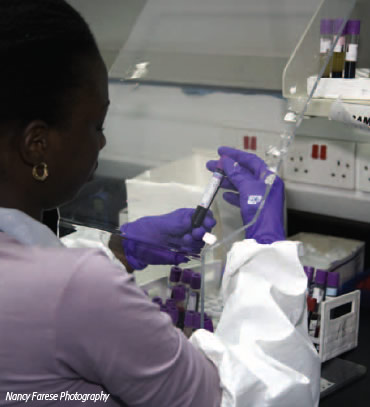
Improving sub-Saharan
Africa’s research capacity is
a key part of Accordia’s fight
against infectious diseases.
By supporting cutting-edge
research in the region,
medical improvements
that are immediately
relevant in resource-limited
settings emerge. To date,
39 research programs
have been undertaken at
IDI that focus on finding
the best ways to prevent
and treat HIV, tuberculosis,
and other conditions that
disproportionately affect
health in the region.
TOP |
|

 2009 has been an exciting year for Accordia Global Health Foundation. We
have much to celebrate as we look back on our work and accomplishments.
But we also recognize how much still needs to be done as we pursue our goal of
overcoming the burden of infectious diseases by building healthcare capacity and
strengthening academic medical institutions in Africa.
2009 has been an exciting year for Accordia Global Health Foundation. We
have much to celebrate as we look back on our work and accomplishments.
But we also recognize how much still needs to be done as we pursue our goal of
overcoming the burden of infectious diseases by building healthcare capacity and
strengthening academic medical institutions in Africa.
This year, the Infectious Diseases Institute (IDI) celebrated its 5th anniversary.
Founded by Accordia, in partnership with Pfizer Inc, the Academic Alliance, and
Makerere University, IDI is now an internationally recognized center of excellence in sub-Saharan Africa. It has
trained almost 5,000 medical professionals in advanced diagnosis and treatment and provides treatment to
about 15,000 patients throughout Uganda; it is also nurturing a new generation of African academic physicians,
helping to develop their research and leadership skills.
Accordia’s 2009 Infectious Diseases Summit convened participants from over 20 African, European, Asian,
and North American countries to consider ways to build healthcare leadership in Africa. Their ideas and
enthusiasm have spread well beyond the Summit, through presentations on the Summit’s recommendations
to international health organizations and with the wide distribution of Building Healthcare Leadership in Africa:
A Call to Action. That report was released at a Washington, DC event at which representatives from Accordia,
the World Bank, the State Department’s Office of the Global AIDS Coordinator, the Global Health Council, and
BroadReach discussed its findings and considered future options.
We recently hosted Accordia’s annual Celebration of Partnership. This year’s event began with a symposium
on the increasing globalization of health that featured Accordia’s 2009 Health Leadership Award recipient, Dr.
Anthony Fauci, director of the National Institute of Allergy and Infectious Diseases, as well as other experts. I
urge you to visit Accordia’s website to view the symposium presentations and the spirited discussion which
followed.
As we approach the end of this very eventful year, I want to thank you. Accordia’s friends and supporters are
essential in helping develop and expand programs that are making an important difference in the lives of
tens of thousands of Africans. Accordia is strengthening communities and saving lives—but we could not do it
without you.

Warner C. Greene, MD, PhD
President, Accordia Global Health Foundation
TOP
Accordia Malaria Training Program Expands
 Every 30 seconds, a child in Africa dies of malaria.
The disease disproportionately affects the African
region: 90% of the estimated 300-500 million
annual clinical cases occur there. Yet, this devastating
disease is both preventable and treatable. To help
arm Africans in the fight against malaria, Accordia
is preparing to expand its proven malaria training
model, with support from ExxonMobil Corporation. Every 30 seconds, a child in Africa dies of malaria.
The disease disproportionately affects the African
region: 90% of the estimated 300-500 million
annual clinical cases occur there. Yet, this devastating
disease is both preventable and treatable. To help
arm Africans in the fight against malaria, Accordia
is preparing to expand its proven malaria training
model, with support from ExxonMobil Corporation.
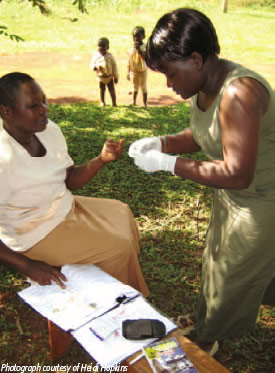
The Accordia Malaria Training Program combines
four components that make the program unique:
multi-disciplinary team training, a training-of-trainers
model, use of rapid diagnostic tools for clinics
without lab capacity, and ongoing support services
at the clinic level. These components have produced
superior and promising results by improving
diagnostic rates, ensuring correct medicines are used,
and reducing the unnecessary use of antimalarials.
The program has already received much attention
and praise in Uganda. The Ugandan Ministry of
Health gave its official endorsement to the program’s
curricula and adapted part of it as national training
policy. USAID required that STOP Malaria funding
recipients in Uganda use this proven approach
to training, and The Global Fund to Fight AIDS,
Tuberculosis and Malaria is backing the expansion
of the field-based training component to at least 20
districts in Uganda by the end of 2009.
As part of an international awareness campaign
on the training model and its success in Uganda,
Accordia will make presentations to Ministries of
Health throughout Africa, international funding
partners, and other stakeholders. Since each African
country has unique circumstances when fighting
malaria, Accordia will adapt the malaria training
model for other African settings and help implement
and evaluate the program in each country.
TOP
|
| FROM THE FIELD
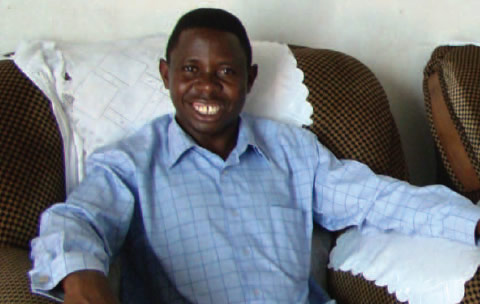
Mitterrand Kiirya during a home visit in Kampala. (Photograph courtesy of Cindy Sadler)
|
Nurse Uses Holistic
Approach to Caring
for Patients
| “The day I saw the first patient at IDI is my
favorite memory. It was a patient who came
with no hope and left smiling. Also, I fondly
remember the first home visit. It’s strange for
medics to go to homes, but it’s important to
have the whole picture of medicine and care.” |
Mitterrand Kiirya began to dream of working in
medicine when he was six years old. “I saw
people hurting and I wanted to stop pain, to alleviate
pain. That was my concern,” he recalls. Today, as an
RN and medical counselor at IDI, Mitterrand is living
that dream.
Conducting Innovative Research
Mitterrand manages a National Institutes of Health-sponsored
research study that compares the effects
of anti-retroviral drug regimens that are designed to
treat HIV-related Kaposi’s Sarcoma. Caused by a virus,
Kaposi’s Sarcoma is one of the most common types
of cancer among people living with HIV. The clinical
trial, which began in May 2007, has seen positive
results thus far in treating the cancer.
Going Above and Beyond
Watching his mother, who is also a nurse, Mitterrand
loved the personal relationships that nurses can
develop with patients, and he is convinced that this
close interaction that addresses patients’ mental and
emotional needs is as important as the provision
of medical care. In addition to nursing certification,
Mitterrand is trained in medical counseling. He uses a
holistic approach to care to address issues that affect
a patient’s well-being and makes it his goal to ensure
that patients leave with a smile on their faces.
To further improve the quality of care for the 100 IDI
patients in the study, Mitterrand visits participants
at their homes, both in Kampala and up-country
in the rural districts. Mitterrand explains that
adherence to the drug regimen is vital for ensuring
success and avoiding drug resistance. Since
many participants live far from IDI and are often
too weak to travel, Mitterrand and his team take
medicine to their homes.
“By visiting patients, we can better monitor
progress or any compounding issues. This extra
effort gives patients confidence in their caregivers
and the study and helps battle many of the
psychological roadblocks to drug adherence.”
TOP
IDI Celebrates 5 Years, Plans to Expand
On October 20, 2004, the Infectious Diseases
Institute (IDI) officially opened its doors. Over
the past five years, it has become a true center
of excellence in sub-Saharan Africa, continuously
expanding its services and outreach. Today, IDI
continues to grow and innovate, serving the
healthcare needs of the people of Uganda and
Africa.
IDI was launched as a result of the visionary
leadership of fourteen physician scientists
from North America, Europe, and Africa. This
“Academic Alliance” created Accordia Global Health
Foundation, which, in partnership with Pfizer Inc
and Makerere University, established IDI. The
Institute builds healthcare capacity through training,
mentoring, research, laboratory services, and
prevention activities. Their efforts are saving lives
and strengthening communities throughout Africa.
The success of IDI's training and treatment model
has far surpassed what its founders originally
dreamed. Services and programs have expanded
throughout Kampala, into rural districts, and to
post-conflict zones in the north of the country. As
a result of this success, the original IDI facility is
overcrowded, and project offices are scattered across
the Makerere campus in rented spaces. To assure
that its programs are as effective as possible, IDI
hopes to soon construct a second building to house
many of its non-clinic functions and consolidate
other activities.
Recently, Makerere University awarded land to IDI for
this expansion, and the planning process for a new
building that will combine state-of-the-art technology
to support IDI's research and training operations, a
large conference space to support university needs,
and interactive gathering spaces to support collegial
interaction and collaboration has begun.
TOP
IDI Provides HIV/AIDS Services to Rural Communities
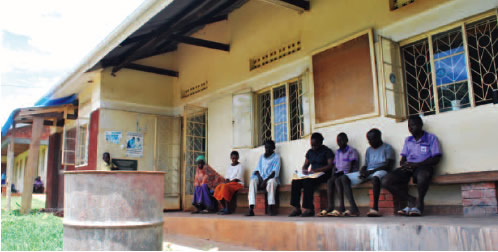
Patients waiting for care at a rural clinic in the Kiboga District. (Edward Echwelu Photography)
Recently, at a health clinic in the rural district of
Kiboga in central Uganda, only one nurse was
available to care for all arriving patients. He was
conducting exams, providing counseling, and running
laboratory tests. He, alone, was there to handle any
emergencies—whether or not he was fully trained
to address them. One of the clinic’s other two staff
members was at a training session; the other was ill.
And one of the four positions at the clinic was vacant.
Addressing Challenges
Africa’s rural health centers, in particular, face
staggering staffing challenges every day. Kiboga
officials estimate that there are only 300 health
workers to care for the almost 300,000 people in
the district—only 47% of positions are filled in the
district’s clinics and hospitals. In contrast, the United
States has over 6,000 healthcare workers for every
300,000 people.
|
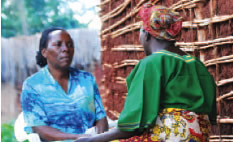 Patients are counseled before receiving HIV test results
(Edward Echwelu Photography)
Patients are counseled before receiving HIV test results
(Edward Echwelu Photography)
|
Inadequate staffing is one of many problems
impeding the delivery of adequate healthcare in
rural Uganda. Clinics struggle with extremely limited
resources, poor infrastructure, inadequate facilities,
and inaccurate or incomplete medical records and
data systems. Further exacerbating the difficulty
of providing services to patients with infectious
diseases in rural settings are expensive and complex
diagnostics, care techniques, and drug regimens.
Improving rural care is vital Around 60% of Africans live in non-urban areas.
Therefore, winning the fight against infectious disease
requires that this population is tested, counseled,
and receives ongoing treatment. In 2008, IDI
launched a program to build healthcare capacity in
two underserved districts, Kibaale and Kiboga, which
represent a combined population of about 800,000
people. The Kibaale-Kiboga Project (KKP) originally
targeted 10 health facilities—five in each district—to
strengthen existing systems and implement new
services for HIV/AIDS prevention and care, including
tuberculosis (TB) management. The first year proved
so successful that IDI is expanding the project to an
additional 11 sites in the two districts by April 2010,
as well as 3 additional underserved districts by
Lake Albert.
A multi-level approach
In partnership with the districts’ health officials, IDI
is identifying the areas of greatest need and the best
ways to implement effective changes. According to
a Kiboga health official, the rural districts’ greatest
challenges are providing consistent healthcare and
medicine, reaching individuals who live in remote
areas, and building and maintaining proper facilities.
The KKP team is training healthcare workers and
community volunteers to fill some of the staffing
gaps in counseling and testing, data management
and record keeping, home-based care, and TB and
HIV management. Additionally, facilities are receiving
basic laboratory equipment, health kits, and stocks of
drugs and other supplies.
Community involvement and mobilization is a key
element to improving HIV/AIDS services in rural
settings. The KKP team is targeting the local markets,
schools, social events, and community radio stations
to promote HIV counseling and testing; initiating
community interventions; recruiting volunteers to
encourage their neighbors to get counseled and
tested; and using the districts’ newly-formed Music,
Dance, and Drama Troupes to engage audiences.
Since its launch in September 2008, the KKP team
has trained hundreds of workers and provided HIV
testing and counseling to over 50,000 people in more
than 275 communities, improving lives and building
a stronger healthcare system for Uganda.
TOP
U.S. Global AIDS Coordinator Ambassador Eric Goosby Visits IDI
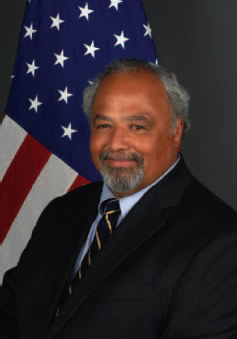 On June 23, 2009, Dr. Eric Goosby was sworn
in as Ambassador at Large and Global AIDS
Coordinator for the U.S. Department of State. In
this role, Ambassador Goosby is responsible for the
United States’ international efforts to prevent and
treat HIV/AIDS. He also oversees the U.S. President’s
Emergency Plan for AIDS Relief (PEPFAR), which
has helped deliver improved care and treatment to
thousands of HIV-positive people globally.
On June 23, 2009, Dr. Eric Goosby was sworn
in as Ambassador at Large and Global AIDS
Coordinator for the U.S. Department of State. In
this role, Ambassador Goosby is responsible for the
United States’ international efforts to prevent and
treat HIV/AIDS. He also oversees the U.S. President’s
Emergency Plan for AIDS Relief (PEPFAR), which
has helped deliver improved care and treatment to
thousands of HIV-positive people globally.
Ambassador Goosby is a pioneer in the fight
against HIV/AIDS, with 25 years of experience in
treating patients and creating effective interventions
throughout the world. When HIV/AIDS first emerged
in the United States, Ambassador Goosby worked
on the front lines, treating patients at San Francisco
General Hospital. Ongoing Commitment to Uganda
Shortly after taking his current office, Ambassador
Goosby visited Uganda to discuss his vision for
the future of PEPFAR. Recognizing Uganda’s
historic role in fighting AIDS in Africa, Ambassador
Goosby met with Ugandan President Museveni
and other leading health officials to express his
commitment to strengthening PEPFAR’s partnership
with the Government of Uganda. During his trip,
he toured some PEPFAR-supported sites, including
the Infectious Diseases Institute (IDI), where he
expressed his admiration for the growth of the
Institute and its impact.
Ambassador Goosby, while praising the work that
has already been done, has also named his priorities
for improving PEPFAR. They include: focusing on
HIV prevention, creating strong country partnerships,
ensuring that HIV/AIDS initiatives are country owned
and led, strengthening health systems, and helping
scale-up effective programs and interventions.
"Today, [IDI] serves as a model of
health systems strengthening and
quality service delivery directed
under complete local ownership and
expertise."
Ambassador Eric Goosby |
Calls IDI a model institution
Prior to joining the Department of State, Ambassador
Goosby served as CEO and Chief Medical Officer of
The Pangaea Global AIDS Foundation. There, he
was actively involved in HIV/AIDS efforts throughout
the developing world—including the development
of the Infectious Diseases Institute. Pangaea was
an early partner in helping to launch IDI and was
instrumental in the construction process. The
organization oversaw the project, ensuring that it was
completed on time and within budget. Pangaea staff
also helped build the financial, legal, administrative,
and managerial structures needed to support IDI’s
training and treatment programs.
In a June hearing before the Senate Foreign
Relations Committee, Ambassador Goosby said, "I
have been fortunate enough to work firsthand with
partners across Africa during my time with Pangaea,
and have engaged in projects that have created
sustainable, tangible results. In Uganda, Pangaea
partnered with academia and the private sector to
help create one of the leading regional HIV/AIDS
training, research and infectious diseases clinics
on the continent, the Infectious Diseases Institute
(IDI). The IDI provides high quality treatment for
HIV/AIDS patients while simultaneously using the
clinic as a platform for training physicians, nurses
and other health care workers, conducting research,
and developing models of integrated HIV/AIDS
prevention and care that are widely applicable
throughout Africa."
TOP
|
Become Part of the Equation
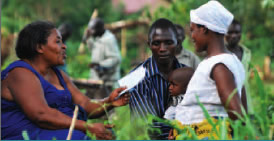 Each healthcare professional trained at IDI
carries forward the skills learned to train
others. The result is a multiplier effect in
an equation that maximizes the impact of
every dollar donated. Our programs and
services reach their full potential through
the generous support of our partners and
donors. Individual gifts at every level enable
Accordia Global Health Foundation to
expand our efforts. Together, we will provide
access to quality medical care, as well
as the tools needed to help Africa move
forward independently to a healthier future.
Please support our work by making your
tax deductible contribution now at
www.accordiafoundation.org or by mail
to the address below. Each healthcare professional trained at IDI
carries forward the skills learned to train
others. The result is a multiplier effect in
an equation that maximizes the impact of
every dollar donated. Our programs and
services reach their full potential through
the generous support of our partners and
donors. Individual gifts at every level enable
Accordia Global Health Foundation to
expand our efforts. Together, we will provide
access to quality medical care, as well
as the tools needed to help Africa move
forward independently to a healthier future.
Please support our work by making your
tax deductible contribution now at
www.accordiafoundation.org or by mail
to the address below.
|
CONTACT US
 For additional information on Accordia Global Health Foundation and our programs, please contact us at: For additional information on Accordia Global Health Foundation and our programs, please contact us at:
Accordia Global Health Foundation
1101 14th Street NW, Suite 801
Washington, DC 20005
phone 202-534-1200
fax 202-534-1220
[email protected]
www.accordiafoundation.org
If you would like to receive this newsletter electronically,
please register at: www.accordiafoundation.org
TOP
|
 |
 |
Ambassador Mark Dybul
Joins Accordia's Board of
Directors
READ |
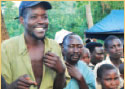 |
IDI Expands Services to
Rural Communities
READ |
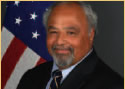 |
Ambassador Eric Goosby
Visits IDI
READ |
|
|
VIEWPOINT |
Dr. Fauci Calls for Long-Term Solutions in Africa
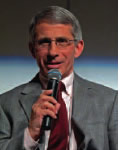 As director of the National Institute of Allergy and
Infectious Diseases, Dr. Anthony Fauci oversees
an extensive research portfolio of basic and applied
research to prevent, diagnose, and treat infectious
diseases. As director of the National Institute of Allergy and
Infectious Diseases, Dr. Anthony Fauci oversees
an extensive research portfolio of basic and applied
research to prevent, diagnose, and treat infectious
diseases.
Why is the globalization of health an
important issue today?
When I came to the NIH a very long time ago as
a fellow in infectious
disease, there was an
attitude around—that was
even expressed by some
prominent individuals in
the government—that the
era of infectious diseases
was essentially over and
we should really focus on
chronic diseases like cardiovascular diseases and
heart diseases. We have vaccines and antibiotics to
fight infectious diseases, they would say. Now, I go
back to those statements and they touch me very
deeply because, as late as the 1960s and 1970s,
there were people—and maybe there still are
people—who look upon infectious disease in a very
provincial manner, as opposed to the impact that it
has globally.
For so long, people were scared of “what’s over
there,” and that it might come over here—HIV
being the best example of that. It is only recently,
with the globalization of our society—particularly
economically, politically, and from a strategic
development standpoint—that people have
become more interested in the health of nations.
Economic interaction cannot be optimized if we
are working with an unhealthy country. A healthy
world is important for everyone.
What can the United States do to help other
countries improve their health outcomes?
The United States should create partnerships and
help developing countries become self-sufficient
and self-sustaining. Developing relationships and
partnerships is a much more successful tactic than
direct foreign assistance because the impact is
longer-term. For so long, the catchphrase was ‘aid;’
now we need partnerships. In that sense, we’ll get
sustainable health infrastructures.
So many people are interested in global health
today. The issue that I’m afraid of is that when
you have this much intense interest, sooner or
later that interest will die down, particularly if you
don’t have continued and sustained resources
that are necessary to address the research and
implementation gaps…. It is really imperative that
we use the momentum that we have to move
forward, recognizing that the enormous challenges
of global health are going to require a long-term
commitment that is sustained even when global
health and those fighting to improve it are no
longer in the headlines.
TOP |
WELCOME |
Ambassador
Mark Dybul Joins Accordia's Board of Directors
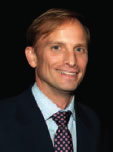 Accordia Global Health Foundation has
expanded its leadership with the addition
of Ambassador Mark Dybul to its Board of
Directors. Accordia Global Health Foundation has
expanded its leadership with the addition
of Ambassador Mark Dybul to its Board of
Directors.
Ambassador Dybul is the co-director of the
Global Health Law Center at Georgetown
University Law
School’s O’Neill
Institute, where
he holds the title
of Distinguished
Scholar. From 2006
to 2009, he served
as the United
States global AIDS
coordinator, leading the implementation
of the President’s Emergency Plan for AIDS
Relief (PEPFAR). There, he also oversaw U.S.
government engagement in the Global Fund
to Fight AIDS, Tuberculosis and Malaria.
Earlier, Ambassador Dybul was acting, deputy,
and assistant coordinator for the Global AIDS
program and a member of the planning task
force that created PEPFAR. He led President
Bush’s International Mother and Child HIV
Prevention initiative at the Department of
Health and Human Services and served as
the assistant director for medical affairs at the
National Institute of Allergy and Infectious
Diseases. Ambassador Dybul also chaired the
Joint United Nations Programme coordinating
board on AIDS.
Ambassador Dybul received the Accordia
Global Healthcare Leadership Award in 2007.
In announcing his election, Board Chairman
Hank McKinnell noted that “Mark’s belief in
Accordia’s mission, coupled with his extensive
experience with global health initiatives and
efforts to fight infectious diseases will be of
great value in helping to guide Accordia’s work
over the next several years.” Dr. McKinnell
continued, “We are honored to have Mark as
a member of our Board.”
TOP |
| |
RECENT GIFTS |
Accordia Acknowledges the Following Major GiftsExxonMobil Corporation awarded Accordia
$500,000 for the scaling-up and subsequent
dissemination of the Comprehensive National
Malaria Training Model.
Accordia received a $250,000 contribution
from the Gilead Foundation in support of the
Gilead Infectious Disease Scholarship Program for
the 5th year.
BD awarded Accordia a $83,000 grant to help
strengthen national laboratory systems in Uganda.
Pfizer, Inc sponsored Accordia’s A Celebration
of Partnership through underwriting support
in the amount of $100,000. Other corporate
contributions included $25,000 from Gilead;
$25,000 from BD; $20,000 from Moody’s;
$10,000 from Futures Group International;
$10,000 from ExxonMobil; and $10,000 from
Tibotec.
The Sage Foundation donated $50,000 to the
Accordia Leadership Fund.
The Karen Katen Foundation made a
contribution of $25,000 to the Accordia Leadership
Fund.
In support of the 2010 Infectious Diseases Summit,
Bristol-Myers Squibb donated $25,000.
The Fondation Bertarelli contributed $25,000 to underwrite the placement of an article in the G8
Summit Briefing Book.
Hiro and Betty Jean Ogawa supported
Accordia's Leadership Fund with a donation of
$21,000.
The Serine Bonnist Charitable Lead Trust
contributed $12,500 to Accordia.
The Norton Family Foundation Trust donated
$10,000 in core support for Accordia.
TOP
|
IDI Training in Enhanced Malaria and HIV/AIDS Prevention, Care & Treatment
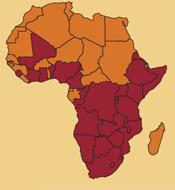
4,813
African healthcare workers have been trained from
27
different African countries.
Countries colored red indicate where African healthcare workers have been trained as of September 30, 2009
TOP |
|
OTHER NEWS IN BRIEF |
|
Dr. Nicholas Hellmann Joins International
Council:
Dr. Hellmann is the executive vice
president of Medical and Scientific Affairs at the
Elizabeth Glaser Pediatric AIDS Foundation. With
extensive expertise in global health issues, Dr.
Hellmann will be an effective ambassador for
Accordia in this volunteer leadership role.
Regional Events Raise Awareness:
Don and Jennifer Holzworth hosted a reception in Vail,
Colorado in July and Dr. Hank McKinnell and
Fred Port hosted a golf outing and reception
in Jackson Hole, Wyoming in September. Both
events educated attendees about efforts to fight
infectious disease in Africa and helped raise
awareness of Accordia’s mission.
Pfizer Fellow at IDI:
Through Pfizer’s Global Health Fellow program, Oonagh Puglisi, senior
specialist for corporate responsibility at Pfizer,
Inc, spent three months at IDI supporting the
Friend’s Council’s activities and strengthening IDI’s
communication efforts.
IDCAP Training Course Launched:
Accordia
rolled out the pilot course in integrated infectious
disease management targeted to midlevel
practitioners as part of a three-year, $12.5 million
grant from the Bill & Melinda Gates Foundation to
lead the Integrated Infectious Disease Capacity-
Building Evaluation. Accordia and its partners also
formed and trained five multidisciplinary mobile
teams to accomplish the delivery of planned onsite
support services, to include clinical training,
coaching, and continuous quality improvement
activities.
Accordia Releases Report on Leadership:
In June, Accordia released Building Healthcare
Leadership in Africa: A Call to Action at an
invitation-only event in Washington, D.C. The
event featured Dr. Jeff Sturchio, Global Health
Council; Joan Holloway, Office of the U.S. Global
Aids Coordinator; Dr. Kate Tulenko, World Bank;
and Dr. Ernest Darkoh, BroadReach Healthcare,
LLC. Approximately 100 leaders from government,
academia, industry, and non-profits attended.
TOP
|
Return on Investment:
Measuring the Long-Term Impact of Building Healthcare Capacity
in Africa and Informing Future Strategies
April 15-16, 2010
Dar es Salaam, Tanzania
Over the past two decades, the international
community has responded to the infectious
disease epidemic in Africa by investing in efforts that
provide affordable medications to lower income
countries, improve diagnostics and discovery of new
treatment options, rapidly train health workers, and
increase access to quality medical care. As these
investments begin to show positive results, there is
an increasing urgency to more effectively gauge the
impact in the health sector to establish best practices
and better inform future strategies.
For many funders and international development
organizations, focus has shifted towards health
systems strengthening, institutional development,
and longer-term capacity building. However, the
shift towards longer-term health systems approaches
creates a challenge. There are inherent difficulties
in establishing metrics that meet short term funding
requirements while fully capturing and clearly
articulating the long-term impact of the investment,
which may evolve over decades. Without robust
measures, a continuous feedback loop, and dynamic
communication strategies, it will be difficult to
sustain the long-term outlook and funding streams
that are being heralded as the critical next step in
preparing Africa to fight the current epidemic, while
also preparing for future health crises.
The 2010 Summit, to be held in Dar es Salaam, will
bring together leading global health funders and
development organizations to discuss “Return on
Investment: Measuring the Long-Term Impact of
Building Healthcare Capacity in Africa and Informing
Future Strategies.”
TOP
|
|
BOARD OF DIRECTORS
Henry A. McKinnell, Jr., PhD
CHAIR
(Retired) Chairman, Pfizer Inc
Warner C. Greene, MD, PhD
PRESIDENT
Director, Gladstone Institute of Virology
and Immunology
Nick and Sue Hellman Distinguished
Professor of Translational Medicine
Professor of Medicine, Microbiology and Immunology,
University of California, San Francisco
Nelson Sewankambo, MD
VICE PRESIDENT
Principal, College of Health
Sciences, Makerere University
Robert Mallett
TREASURER
Former Senior Vice President, Worldwide
Public Affairs and Policy, Pfizer Inc
Carol Spahn
SECRETARY
Executive Director, Accordia Global Health
Foundation
Katherine Burke
Global Health Advocate
Gary M. Cohen
Executive Vice President, BD
Mark Dybul, MD
Co-Director, Global Health Law Center,
Georgetown University of Law School's O'Nell Institute
Joe Feczko, MD
(Retired) Senior Vice President, Chief
Medical Officer, Pfizer Inc
Julie L. Gerberding, MD, MPH
Former Director, Centers for Disease
Control and Prevention
Donald A. Holzworth
Chairman, Futures Group International
Hiromitsu Ogawa
Managing Partner and Founder,
Quest Venture Partners
Fred Port
(Retired) Director, Callaway Golf and
President, Callaway Golf International
Tommy G. Thompson
Partner, Akin Gump Strauss Hauer & Feld, LLP
Independent Chairman, Deloitte Center
for Health Solutions
Former Secretary, US Department of
Health and Human Services, 2001–2005
Former Governor, Wisconsin
TOP
ACADEMIC ALLIANCE MEMBERS
Michael Scheld, MD
Co-Chair
University of Virginia School of Medicine
Nelson Sewankambo, MBChB,
MMed, MSc
Co-Chair
Makerere University Medical School
Robert Colebunders, MD, PhD
University of Antwerp
Jerrold Ellner, MD
UMDNJ-New Jersey Medical School
Warner C. Greene, MD, PhD
Gladstone Institute of Virology and Immunology / University of California, San Francisco
Moses Joloba, MB ChB
Makerere University Medical School
Moses R. Kamya, MB ChB, MMed, MPH
Makerere University Medical School
Elly T. Katabira, MB ChB, FRCP
Makerere University Medical School
Edward Katongole-Mbidde, MB ChB, MMed, MRCP
Uganda Virus Research Institute
Harriet Mayanja-Kizza, MB ChB, MMed (Int Medicine), MS
Makerere University Medical School
Keith McAdam, MB BChir, FRCP, FWACP
London School of Hygiene and Tropical Medicine
Henry A. McKinnell Jr., PhD
Accordia Global Health Foundation
Concepta Merry, FRCPI, MSc, PhD
Trinity College Dublin
Roy D. Mugerwa, MB ChB, MMed
Makerere University Medical School
Philippa Musoke, MD
Makerere University Medical School
Thomas Quinn, MD
John Hopkins University
Allan Ronald, MD
University of Manitoba, Winnipeg
Walter F. Schlech, MD
Dalhousie University
Gisela Schneider, MD, MPH
German Institute for Medical Mission
David Serwadda, MD
Institute of Public Health, Makerere University
David Thomas, MD
Johns Hopkins School of Medicine
Fred Wabwire-Mangen, MB ChB, DTM&H, MPH, PhD
Institute of Public Health, Makerere University
TOP |
|